
Guide for Calisthenics
A guide to mastering your own bodyweight
GYM
Miguel Forés
5/22/20265 min read
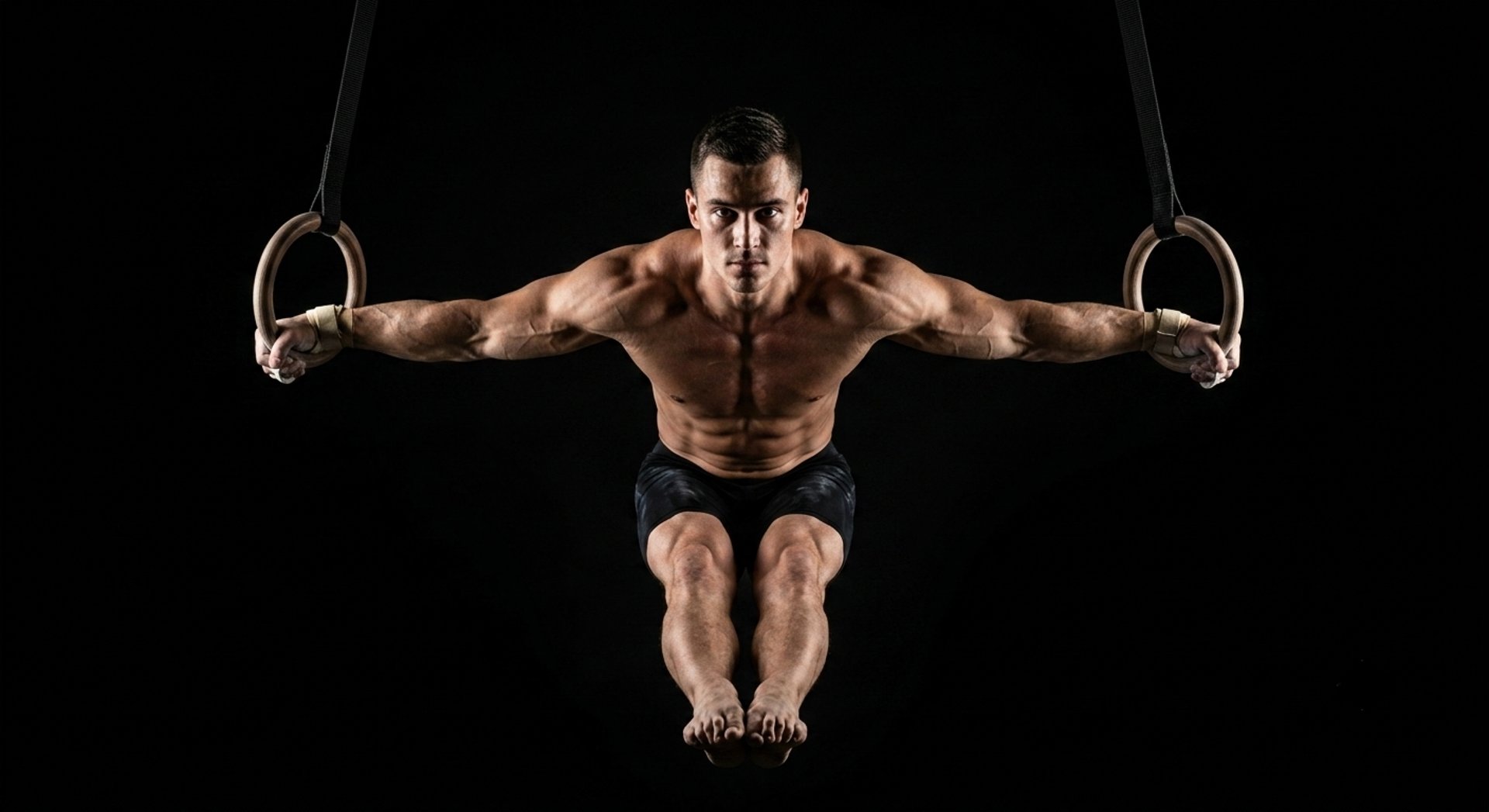
Calisthenics: a complete guide to mastering your own bodyweight
Calisthenics is probably the oldest and most honest way to train. No machines, no pulleys, no excuses. Just your body, gravity and a bar. Modern gyms have filled their floors with ever more sophisticated equipment, but the reality is that some of the most impressive and functional physiques in the world are built solely by moving bodyweight against the resistance of gravity.
At HORIZONTE we believe in training that gets to the point: robust, well-thought-out equipment and exercises that genuinely transform the body. And few disciplines embody that philosophy better than calisthenics. This guide runs through the fundamental exercises, how to progress in them, and why this way of training remains unbeatable after thousands of years.
What calisthenics actually is
The word comes from the Greek: kallos (beauty) and sthenos (strength). Beautiful strength, or strength through the movement of your own body. In practice, calisthenics is any training that uses bodyweight as resistance: push-ups, pull-ups, dips, squats, planks and their countless variations.
Its great advantage is twofold. On one hand, it develops enormous relative strength, meaning strength in relation to your own weight, which is exactly what you need to move with ease in the real world. On the other, it builds body control, coordination and stability in a way that machines, with their guided path, can't match. When you do a pull-up, you're not just working the back: your core, your shoulders and dozens of stabilising muscles work together to keep you steady.
The pushes: the foundation of the upper body
The push pattern is the cornerstone of chest, shoulder and triceps training in calisthenics. And it all starts with the push-up.
The classic push-up is much more than a warm-up exercise. Done well, with the body in a straight line from head to heels and the core tight, it's a complete upper-body exercise. The key is to lower in a controlled way until the chest almost brushes the floor and push up with power, without letting the hips drop or sticking the backside up.
From there, the variations multiply the difficulty. Diamond push-ups, with the hands together forming a triangle under the chest, shift much of the work to the triceps. Archer push-ups, loading the weight onto one arm while the other extends out to the side, are a brutal intermediate step toward the one-arm push-up. And pike push-ups, with the hips raised and the torso vertical, are the gateway to shoulder work and, later on, the handstand.
Parallel bar dips deserve a special mention. They are possibly the best bodyweight pushing exercise that exists. They work the chest, triceps and shoulder intensely, and allow you to add extra weight when bodyweight falls short. Leaning slightly forward emphasises the chest; staying vertical loads the triceps more.
The pulls: where the back is built
If pushing is the visible half of the upper body, pulling is what builds the real strength and the V-shaped back. And here the pull-up is the undisputed queen.
The pull-up is the exercise most people aspire to master and the one that resists them most. There are no shortcuts: it requires strength, and that strength has to be built. If you can't yet do a full one, the path runs through negative pull-ups (jumping up and lowering as slowly as possible), band-assisted pull-ups, and dead hang work, simply hanging from the bar to strengthen the grip and get the body used to the tension.
Once you master the basic version, the grip changes everything. The wide, pronated grip (palms forward) emphasises the lats and opens up the back. The close, supinated grip, better known as the chin-up, brings more biceps into play and tends to be a little more accessible at first. Alternating both in your routine gives you far more complete development.
For those looking to go further, calisthenics offers an almost infinite horizon: the weighted pull-up for raw strength, the explosive pull-up bringing the chest to the bar, the muscle-up that combines pull-up and dip in a single movement, and advanced progressions like the front lever, where the body stays horizontal and suspended, one of the greatest strength milestones of this discipline.
The core: much more than abs
In calisthenics, the core isn't a muscle group you train on ab day and forget the rest of the week. It's the centre that stabilises absolutely every other exercise. A pull-up, a dip or a handstand are all held up by a strong core.
The front plank is the isometric exercise par excellence. Holding the body straight and firm, squeezing the abs and glutes, for as long as possible, builds a stability that transfers to everything else. The side plank adds oblique work and lateral stability.
Beyond planks, the ab wheel is one of the most demanding and effective core exercises that exists, as long as you control the range and don't let the lower back sag. The hollow hold, that boat position with the back pressed to the floor and arms and legs raised, is the foundation of body control in gymnastics and advanced calisthenics. And hanging leg raises from the bar combine core strength with grip work, setting the stage for advanced movements like toes to bar.
The lower body: legs are calisthenics too
There's a myth that calisthenics neglects the legs. It's false. What happens is that the lower body is so strong that two-legged bodyweight movements fall short quickly, so the trick is to switch to unilateral work.
The classic squat is the starting point, but you'll soon need more stimulus. The Bulgarian split squat, with the rear foot elevated, concentrates almost all the work on a single leg and is brutal for the quads and glutes. Lunges, walking or jumping, add a component of power and balance. And for the more advanced, the single-leg squat or pistol squat is the leg equivalent of what the one-arm pull-up represents for the upper body: a milestone of strength, balance and mobility.
The glute bridge and its single-leg variations complete the work, strengthening the posterior chain, as important for back health as for performance.
How to progress in calisthenics
The great beauty of calisthenics is that progression doesn't depend on buying more plates, but on mastering increasingly difficult movements. The principle is called progression by difficulty, and it works like this: when an exercise becomes easy, you don't add weight, you switch to a more demanding variation that recruits more fibres or requires more control.
You move from the normal push-up to the one-arm push-up. From the pull-up to the muscle-up. From the squat to the pistol. Each rung builds the strength needed for the next, and the process can last years without ever reaching a real ceiling.
This doesn't mean giving up on weight. Adding load to pull-ups and dips is one of the most effective ways to gain pure strength. But even there, the foundation is always mastery of the movement with your own body.
Tracking is as important as in any other discipline. Log your reps, your plank seconds, your progressions. Without honest tracking, it's impossible to know whether you're really advancing or simply repeating the same thing week after week.
What you need to get started
One of the reasons calisthenics is so addictive is how little it demands to begin. With a sturdy, well-anchored pull-up bar, a set of parallel bars and some clear floor space, you've got practically the entire range of exercises in this guide covered.
That said, the equipment matters. A bar that moves, that creaks or that doesn't inspire confidence is a bar that sabotages your training before you even start. When you hang your entire bodyweight from a single anchor point, robustness isn't a luxury: it's safety. That's why at HORIZONTE we manufacture laser-cut steel accessories designed to withstand real loads, with quality screws and anchors included to fix them securely to any wall type.
To finish
Calisthenics never goes out of fashion because it responds to something essential: the ability to move your own body with strength, control and ease. You don't need the latest machine or the most expensive gym. You need consistency, a reliable bar and the will to progress rung by rung.
Start where you are. Master the basics before rushing toward the advanced. And remember that every great calisthenics movement, however spectacular it looks, was built on thousands of honest repetitions of the fundamentals.
Your space. Your gear. Your rules.
Miguel Forés
HORIZONTE
contact@horizontegear.com
© 2026 HORIZONTE by Lezoconcept. All rights reserved.. License N0459290/M4370593 Spain