
Marine Training (USMC)
The functional routine of America's toughest infantry — could you keep up?
GYM
Miguel Forés
5/22/20264 min read
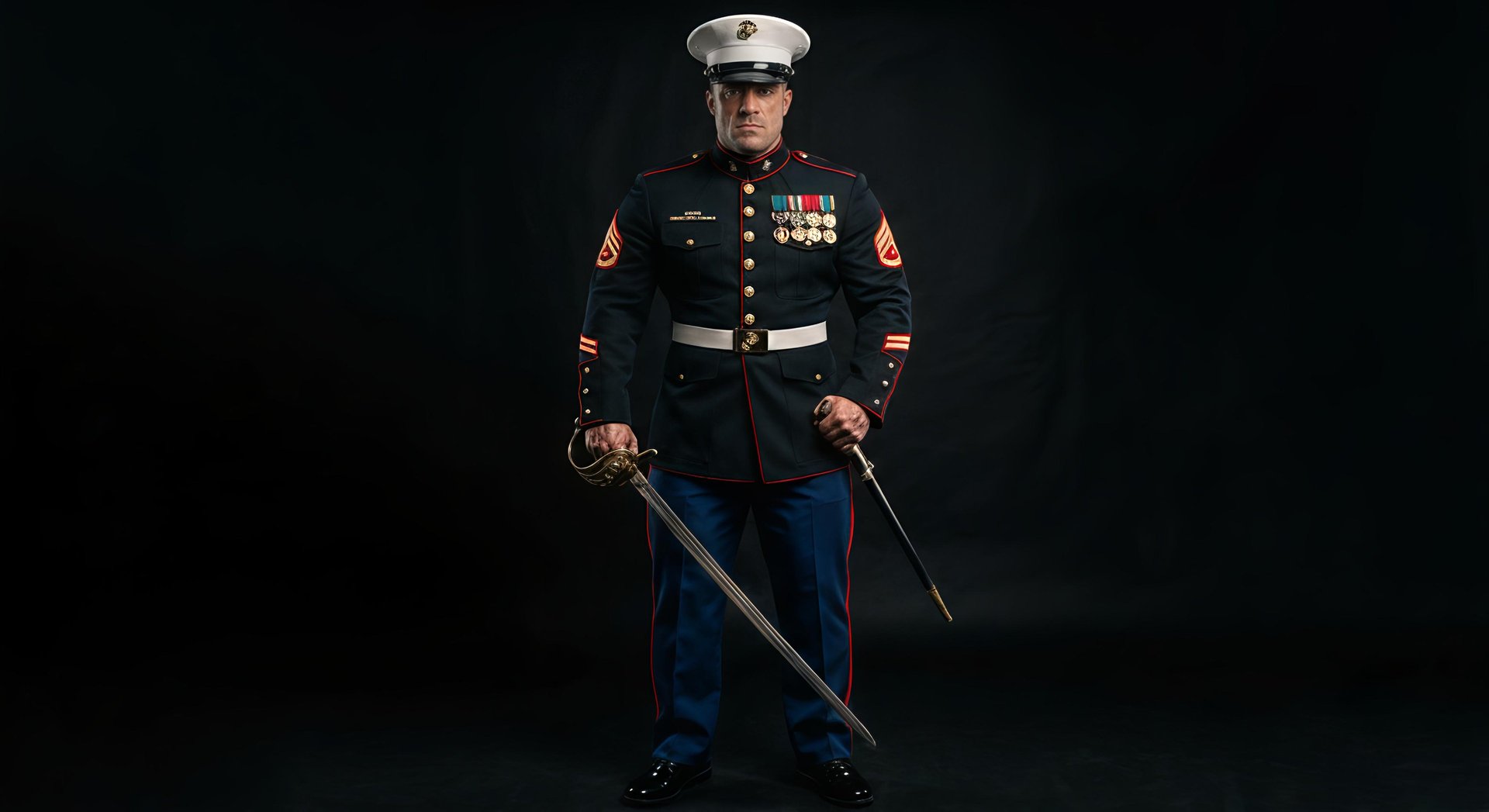
Marine Training (USMC) The functional routine of America's toughest infantry — could you keep up?
There's a phrase that sums up the philosophy of the United States Marine Corps: "every Marine is, first and foremost, a rifleman." No matter your specialty, your rank or your posting: first you're a soldier capable of moving, carrying weight, fighting and enduring in any terrain and any condition. And that starts with the body.
A Marine's training doesn't look like a bodybuilder's, or like that of someone chasing a mirror physique. It looks like what the body actually needs to do in the real world: run with gear, climb, crawl, carry a fellow Marine, get up off the ground a thousand times without running out of strength. It's functional training in its purest form, forged by more than two centuries of one of the most demanding infantries on the planet.
Unlike a conventional gym, here bodyweight, running and functional conditioning rule over machines. This routine is built on that same logic: five days designed not to make you look better in the mirror, but to make your body work when it really matters.
The philosophy behind Marine training
The physical conditioning of the USMC is measured by two official tests that define its entire approach: the PFT (Physical Fitness Test) and the CFT (Combat Fitness Test).
The PFT measures the foundation: maximum pull-ups or push-ups, crunches or plank, and a three-mile run (about 4.8 km). It's the test of relative strength and aerobic endurance.
The CFT measures combat application: a short run with gear, an ammunition carry, and a test combining drags, carries, throws and burpees under fatigue. It's the test of functional strength under stress.
Between them they draw the physical profile of the Marine: someone who combines relative strength, power, endurance and work capacity. Not the biggest, not the fastest at a single thing, but the most complete and the hardest to break.
This routine translates that philosophy into five days you can do with minimal equipment.
The routine: 5 days of functional conditioning
Each day combines strength, bodyweight and a conditioning component. This isn't an isolation routine: it's a total-capacity routine. Get ready to sweat.
Day 1 — Upper-body push and pull (The rifleman's foundation)
Relative strength — moving your own body — is king of the PFT. This day directly attacks pull-ups and push-ups, the two star events of the Marine test.
Pull-ups — 4 sets of max reps
Push-ups — 4 sets of max reps
Parallel bar dips — 3 sets of 10 to 15 reps
Diamond push-ups — 3 sets to failure
Plank with shoulder taps — 3 sets of 20 taps
Day 2 — Core and endurance (The central engine)
In the PFT, the Marine has two minutes to do maximum crunches or hold the plank. In combat, the core is what transmits force when carrying, dragging and lifting. This day forges it to the limit.
Front plank — 3 sets of 60 seconds
Hanging leg raises — 3 sets of 12 to 15 reps
Full crunches — 3 sets of 30 reps
Russian twists — 3 sets of 20 per side
Mountain climbers — 4 sets of 40 seconds
Hollow hold — 3 sets to failure
Day 3 — Running and conditioning (The three miles)
Running is non-negotiable in the Corps. The PFT's three-mile run demands a solid aerobic engine, and interval conditioning replicates the shifting effort of combat. This is the day to leave it all out there.
Continuous run — 20 to 30 minutes at a sustained pace
Sprints — 8 sets of 100 metres with short rest
Burpees — 5 sets of 15 reps
Box jumps or step-ups — 4 sets of 20 reps
Mountain climbers — 4 sets of 30 seconds
Day 4 — Functional strength and carries (Combat day)
This day replicates the CFT: carry, drag, lift and move under fatigue. It's the closest to what a Marine actually does in the field. If you have dumbbells or some weight, this is where they come into play.
Farmer's walk (carry weight while walking) — 4 sets of 40 metres
Goblet squat with dumbbell — 4 sets of 12 reps
Walking lunges with weight — 3 sets of 20 steps
Romanian deadlift with dumbbells — 3 sets of 12 reps
Thrusters (squat + press) — 4 sets of 12 reps
Load drag or push — 4 sets of 30 metres
Day 5 — Active recovery (The Marine's recovery)
The Corps understands that recovery is part of training, not its opposite. A broken Marine is no use. This day is active recovery: gentle movement that helps you recover without adding stress.
Light 30 to 40 minute walk Stretching and joint mobility Breathing work or hip and shoulder mobility No intensity: the goal is to arrive fresh the next day
Day 6 — Legs and power (The foundations)
In the Corps, the legs carry everything: the gear, the weight, the distances. A powerful lower body is the difference between keeping up the march or falling behind. This day builds that power base.
Squats — 4 sets of 15 to 20 reps
Bulgarian split squat with dumbbells — 3 sets of 12 per leg
Jump lunges — 3 sets of 20 total Glute bridge — 3 sets of 15 reps
Squat jumps — 4 sets of 15 reps Calf raises — 4 sets of 20 reps
Day 7 — Complete rest
The seventh day is total rest. The body grows and repairs when you stop, not when you train. Sleep well, eat enough protein, hydrate and get ready to start the cycle again at full strength.
How to progress like a Marine
In the Corps, progress isn't optional: it's measured twice a year in the PFT and CFT, and everyone knows exactly where they stand. Apply that same mentality:
Log your maxes. How many pull-ups, how many push-ups, what time on the run. Without numbers you don't know if you're improving. Beat your own marks. Every week try one more rep, one second less, one metre further. Don't skip the conditioning. The temptation is to do only the strength work and skip the run. In the Corps, that fails you. In real life, it leaves you without a base.
To finish
Marine training doesn't aim to create perfect bodies. It aims to create capable bodies: capable of enduring, of carrying, of continuing when the body asks to stop. It's a philosophy that goes beyond the physical — it's the idea that preparation isn't proven in the gym, but when things get hard and there's no option to quit.
You don't need to be a Marine to train like one. You just need to accept the same premise: that true fitness isn't how you look, but what your body is capable of doing when it's truly tested.
Semper Fi.
Could you keep up with the Corps?
contact@horizontegear.com
© 2026 HORIZONTE by Lezoconcept. All rights reserved.. License N0459290/M4370593 Spain