
Steel mace training
The ancient tool conquering modern gyms
GYM
Miguel Forés
7/10/20265 min read
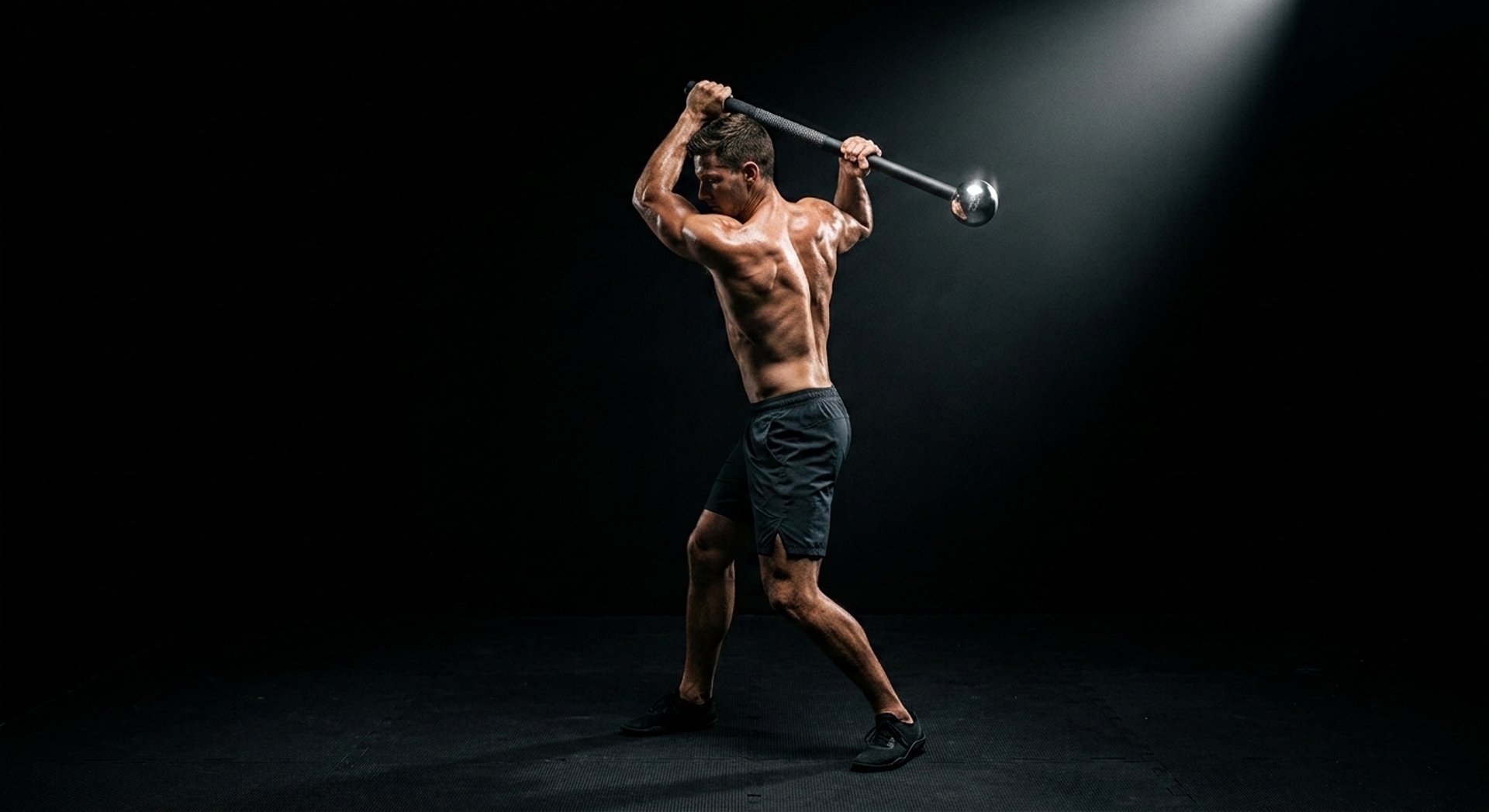
There are few training tools with so much history and so little recognition as the steel mace. What is now starting to appear in the most functional gyms is, in reality, one of the oldest forms of training in the world: the gada, the traditional mace of Indian wrestling, which warriors and wrestlers of the subcontinent have used for over a thousand years to build a strength unlike any other.
At HORIZONTE we like equipment with purpose, and few tools have as much as the mace. Its off-centre weight, concentrated at one end of a long bar, forces the body to work in a way that no dumbbell or conventional barbell can replicate. This article explains what exactly the mace is, what it works, how to structure a training week with it and why it deserves a place in your space.
What a steel mace is and why it's different
A steel mace is, essentially, a weighted ball mounted at the end of a steel bar between 60 and 120 centimetres long. That completely off-centre weight distribution is what makes it unique. When you move it, you're not simply lifting a load: you have to control a lever that wants to escape your hands, and that control activates entire muscular chains that traditional training usually ignores.
The difference from a dumbbell is easy to understand. A dumbbell has the weight balanced on both sides of the grip. A mace concentrates almost all the weight far from the hands, which multiplies the leverage arm and forces the shoulders, the core and the grip to work constantly to stabilise the movement. It's strength applied to control, not just to lifting.
Its great specialty is rotational and shoulder work. The characteristic mace movements, the mills that spin the weight around the head and back, develop a shoulder mobility and endurance that very few tools achieve, while strengthening the entire midsection of the body.
Which muscle groups the mace works
Although it may seem like a tool focused on the arms, the reality is that the mace is one of the most complete implements that exists for the upper body and core.
The shoulders are the main players. The rotational movement around the head works the deltoid at every angle and, above all, develops the health and mobility of the shoulder joint, an area many neglect and that is a frequent source of injury.
The core works constantly and often anti-rotationally, meaning resisting the weight's tendency to make us twist. This type of work builds a functional, stable core, far more useful in real life than endless sets of crunches.
The grip and forearms receive a brutal stimulus. Holding and controlling a long lever with weight at the end demands a grip strength that transfers to absolutely every other exercise, from pull-ups to the deadlift.
The upper back and traps activate to stabilise and brake the weight on each rep, and overall coordination and the connection between the body's hemispheres improve with the cross-body patterns characteristic of the mace.
The fundamental movements
Before structuring the week, it's worth knowing the base movements on which all mace training is built.
The mill or 360 is the star movement. It consists of dropping the mace behind one shoulder, circling it around the head and back, and returning it to the front. It's the exercise that best develops shoulder mobility and strength, and the foundation on which the others are learned.
The 10 to 2, named after the clock positions, is a more controlled version of the mill: the mace goes from one position to another passing behind without completing the full turn. It's ideal for beginners and for safely warming up the shoulder.
The swing, or front swing, works the posterior chain and core explosively, similar to a kettlebell swing but with the added leverage of the mace.
The presses and presentations develop direct shoulder strength by holding the mace vertically, an enormous stabilisation challenge due to the off-centre weight.
The grip switches and grip work, changing the position of the hands on the bar, build that forearm strength so characteristic of this tool.
How to structure your mace training week
The mace can be trained as a complement to your regular routine or as the base of a complete functional workout. This proposal spreads it across five working days, combining technique, strength and conditioning, with two rest days.
Monday is dedicated to technique and shoulders, starting with the mills and the 10 to 2 to build the movement base and joint mobility. Tuesday is oriented toward the core and rotational strength, with swings and anti-rotational work. Wednesday is rest, because the shoulder needs recovery after the intense work of the first days. Thursday focuses on direct strength and the press, working vertical stabilisation. Friday is conditioning and complexes day, chaining movements to build endurance. Saturday adds light grip and mobility work, and Sunday is complete rest.
The key with the mace, more than with almost any other tool, is to start light. The off-centre weight deceives: a five-kilo mace feels much heavier than a five-kilo dumbbell because of the leverage arm. It's far better to master the technique with a light weight than to risk a shoulder injury through overambition.
Tips for training safely with the mace
Mace training is extraordinarily safe when done well, but it demands respect for technique. These are the points I most emphasise to those starting out.
Always start with a weight you can control comfortably. If the mace dominates you instead of the other way around, reduce the weight. There's no rush.
Warm up the shoulder thoroughly before each session. The shoulder joint is the most mobile and the most vulnerable in the body, and the mace movements take it through wide ranges. A few minutes of joint mobility prevent most problems.
Learn the mill slowly and in parts before chaining it. First practise the path behind the head with control, without seeking speed. Fluidity comes with repetition, not by forcing it.
Keep the core engaged throughout the movement. It's what protects your lower back and what gives you control over the lever. A relaxed core is the gateway to lumbar problems.
Train in a clear space. The mace sweeps a wide radius around your body, so make sure you have free space above and to the sides before starting.
Store the mace in a safe and accessible place. A mace left on the floor is a tripping hazard and takes up the space you need to move. A dedicated wall rack keeps it vertical, accessible and out of the way, while turning it into a visible feature of your training zone. At HORIZONTE we've designed steel racks made precisely for this, with the robustness and quality hardware that characterises all our equipment.
To finish
The steel mace isn't a passing fad. It's one of the oldest training tools in the world, rediscovered for a reason: it builds a functional strength, a shoulder mobility and a body control that very few things match. It doesn't replace dumbbells or the barbell, it complements them, providing exactly what traditional training usually leaves out.
Start light, respect the technique, be consistent. Like any real tool, the mace rewards those who learn it with patience. And once you feel how the off-centre weight forces your whole body to work as a unit, it's hard to go back.
Your space. Your gear. Your rules.
Miguel Forés
HORIZONTE
contact@horizontegear.com
© 2026 HORIZONTE by Lezoconcept. All rights reserved.. License N0459290/M4370593 Spain