
The Emperor's Guard (The Praetorians)
The elite within Rome's elite — do you have their level?
GYM
Miguel Forés
5/22/20264 min read
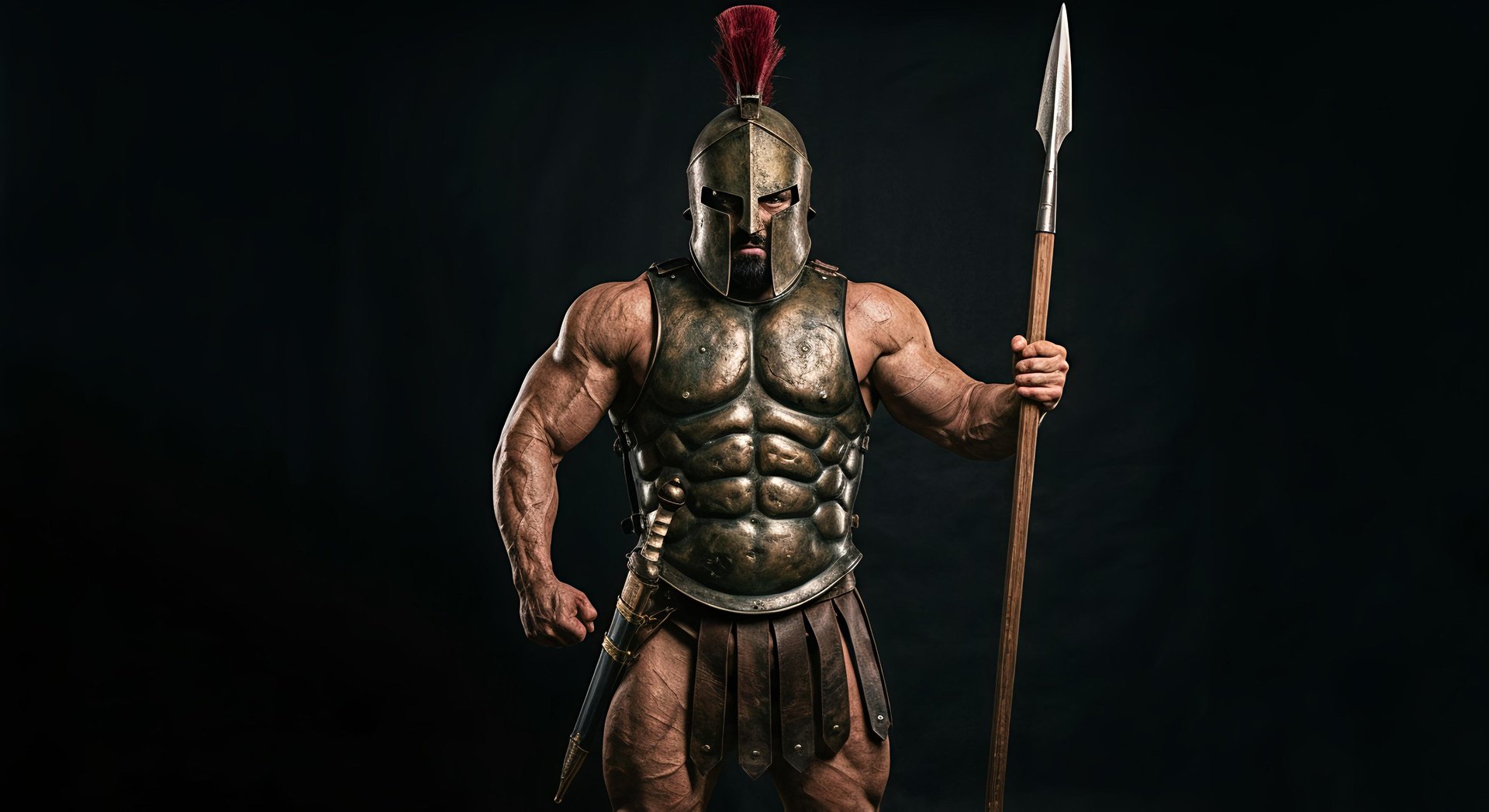
The Emperor's Guard (The Praetorians) The elite within Rome's elite — do you have their level?
If the Roman legion was the finest infantry of antiquity, the Praetorian Guard was the elite within that elite. Not just anyone became a Praetorian. They were selected from among the most capable legionaries, with years of service behind them, and their mission wasn't to conquer distant frontiers but something far more delicate: to protect the emperor's life and keep order in the very heart of Rome.
That completely changed their physical preparation. A campaign legion was forged on the march, crossing Europe on foot carrying gear for weeks. The Praetorian, by contrast, was an urban soldier. His job was escort, guard duty, rapid intervention and close combat in the streets and palaces. He didn't need the endurance of an endless walker: he needed strength, explosive power and the ability to react in seconds.
Created by the emperor Augustus around 27 BC, the Praetorian Guard became so powerful that for centuries it didn't just protect emperors: on more than one occasion it made and unmade them. A body of physically imposing men, trained to a level the rest of the army could only aspire to reach.
This is the story of how they prepared. And a routine for you to try.
What made the Praetorian different
The Praetorian shared the foundation of legionary training — the work against the post, the handling of the sword, the formation — but with a different emphasis, shaped by his role as an elite guard.
Power over endurance
While the campaign legionary needed to withstand endless days, the Praetorian needed to explode. An intervention in the streets of Rome, defending the emperor against a threat, sudden combat in a palace corridor: it was all decided in seconds of maximum force. Praetorian training prioritised explosive power over long-duration endurance.
Close combat and reaction
In open field, the legion fought in formation. But the Praetorian operated in tight spaces: streets, courtyards, halls. Hand-to-hand combat at close range demanded reflexes, agility and an upper-body strength capable of prevailing in the first clash, with no room for a second attempt.
The physique as a symbol of authority
The Praetorian didn't just have to be strong: he had to look it. As the visible guard of imperial power, his physical presence was part of his function. An imposing body was, in itself, a tool of deterrence and status.
The routine: 5 days to forge that physique
This routine keeps the structure of our other historical tables, but each day is oriented toward what defined the Praetorian: strength, power and the ability to prevail in the first instant.
Day 1 — Chest (The first clash)
In the Praetorian's close combat, the first contact was everything. The push of the chest, triceps and anterior deltoid was the difference between prevailing immediately or giving the opponent a second chance that could be fatal.
Parallel bar dips — 2 or 3 sets of 8 to 12 reps
Dumbbell flyes — 2 or 3 sets of 8 to 12 reps
Archer push-ups — 2 or 3 sets to failure
Ab wheel — to failure
Day 2 — Abs (The guard's balance)
On duty for hours, in constant tension, ready to react at any moment. The Praetorian needed an iron core not to march but to hold position and to generate instant power from stillness. Explosive strength is born from the centre of the body.
Front plank — 3 sets of 45 to 60 seconds
Side plank — 3 sets of 30 seconds per side
Lying leg raises — 3 sets of 12 to 15 reps
Crunches with legs elevated — 3 sets of 15 to 20 reps
Ab wheel — 3 sets to failure
Mountain climbers — 3 sets of 30 seconds
Day 3 — Legs (The rapid intervention)
The Praetorian didn't march a thousand kilometres, but he had to move fast when it mattered: covering the distance to the emperor, bursting into a room, prevailing in a close fight where the legs provide the base of all strength. Leg power, not kilometres.
Bulgarian split squat with dumbbells — 2 or 3 sets of 10 to 15 reps per leg
Squats — 2 or 3 sets of 10 to 15 reps
Glute bridge — 2 or 3 sets of 10 to 15 reps
The soldier (deep squat walk) — optional, to failure
Calf raises — 2 or 3 sets of 10 to 15 reps
Day 4 — Back and shoulders (The escort)
Carrying the shield, holding the weapon raised through hours of guard duty, dominating the opponent in the grip of close combat. The Praetorian's back and shoulders were his daily working tool, not just a battle tool. This day builds them.
Bent-over lateral raises — 2 or 3 sets of 8 to 12 reps
Lateral raises — 2 or 3 sets of 8 to 12 reps
Wide-grip pull-ups — 2 or 3 sets of 8 to 12 reps
Close-grip pull-ups — 2 or 3 sets of 8 to 12 reps
Ab wheel — to failure
Day 5 — Rest (The relieved guard)
Even the emperor's guard wasn't on permanent duty. Praetorians rotated shifts, and rest was part of the system that kept them always ready. Without recovery, no power lasts. This day is as important as the other four.
Sleep well. Eat enough protein. Hydrate. Do light mobility work if you feel like it, but nothing intense.
Day 6 or 7 — Arms (The guard's gladius)
The Praetorian's weapon in close combat was, as in all Roman infantry, the gladius: a short sword wielded with explosive arm strength and an unrelenting grip. In the tight space of a corridor or a street, the Praetorian's arm decided the outcome in an instant.
Concentration curl — 2 or 3 sets of 8 to 12 reps
Hammer curl — 2 or 3 sets of 8 to 12 reps
Close-grip pull-ups — 2 or 3 sets of 8 to 12 reps
Overhead triceps extension — 2 or 3 sets of 8 to 12 reps
Diamond push-ups — 2 or 3 sets of 8 to 12 reps
Triceps kickback with band — 2 or 3 sets of 8 to 12 reps
How to progress
The Praetorian didn't reach the guard by luck. He reached it after years of service and constant improvement, selected precisely because he had proven to be above the average legionary. You have three ways to apply that same principle of progression:
Add weight when you reach the top of the rep range with good technique. Add reps while maintaining the same weight. Add sets when the body no longer feels the effort as before.
Write it down. Without tracking there is no real progress, only feelings.
To finish
The Praetorians represented the peak of the Roman military system. They weren't the ones who marched the most or fought the great frontier battles, but they were the chosen ones: those who had proven, year after year, that they were above average. Their strength wasn't only physical, it was the result of constant selection and a demand that never dropped.
This routine won't make you an emperor's guard. But it's built on the same idea that defined them: being good once isn't enough, you have to prove it every day. Elite isn't a point you reach. It's a level you maintain.
Do you have the level of those who guarded Rome?
contact@horizontegear.com
© 2026 HORIZONTE by Lezoconcept. All rights reserved.. License N0459290/M4370593 Spain