
The Warrior of Sparta (The Agoge)
The system that forged the most feared soldiers in Greece — could you endure it?
GYM
Miguel Forés
5/22/20264 min read
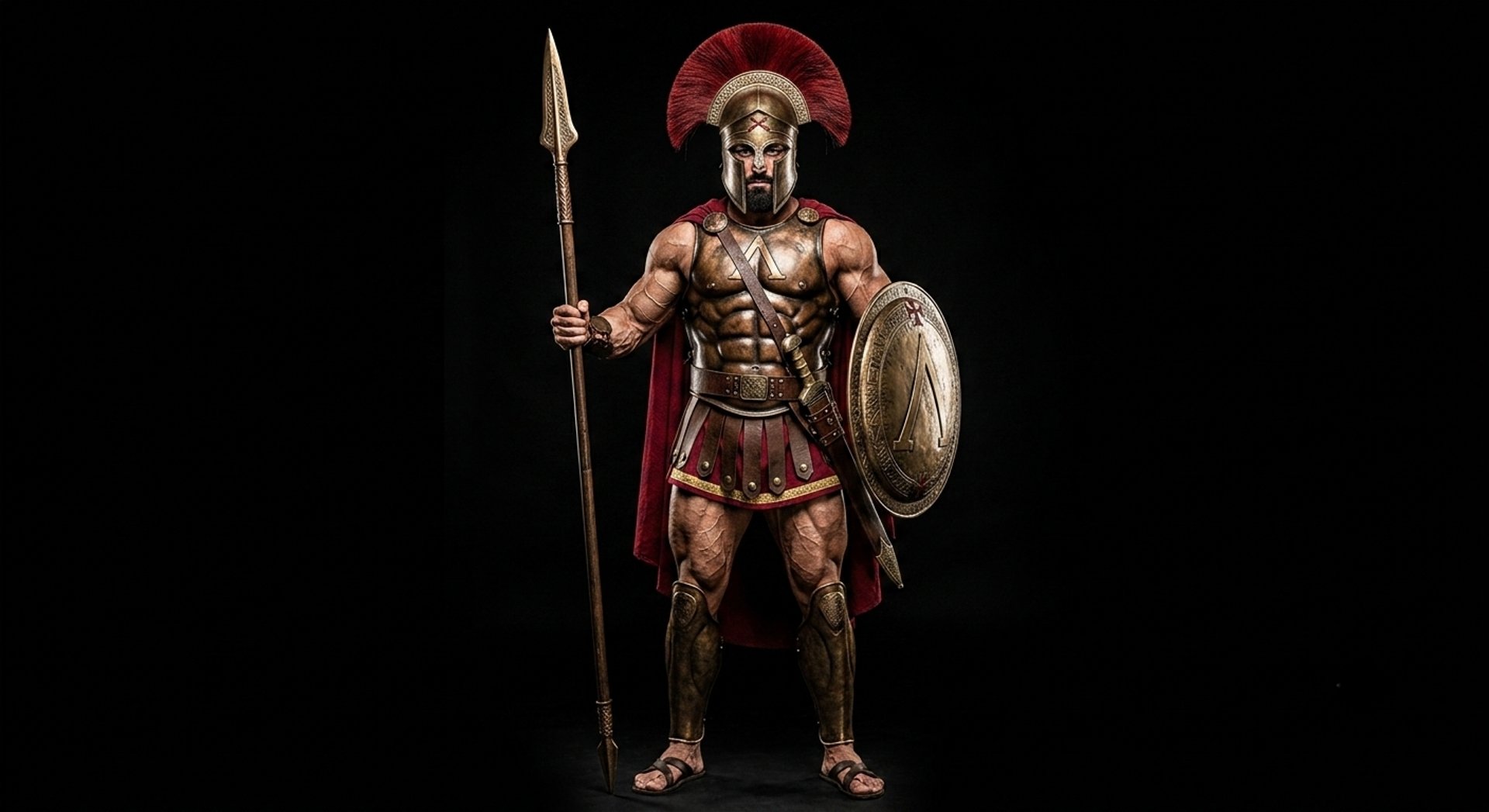
For centuries, a single word was enough to intimidate any army in the Greek world: Sparta. Not because they were more numerous — they never were — nor because they had better weapons, but because every Spartan was the product of a training system so extreme it had no equal in all antiquity. That system was called the agoge.
While the rest of the Greek cities educated their young in philosophy, rhetoric and the arts, Sparta had a single goal for its sons: to turn them into warriors. The agoge began at age seven and never really ended. It was a regime of discipline, physical endurance, austerity and combat that produced soldiers capable of holding the phalanx formation when anyone else would have broken ranks and fled.
The Spartans weren't the biggest or the most muscular of the ancient world. They were something harder to achieve: the most resilient, the most disciplined and the hardest to break, physically and mentally. Their strength didn't come from lifting stones, but from a whole life of constant demand.
This is the logic of how a Spartan was forged. And a routine inspired by those same principles.
The pillars of the agoge
Spartan training didn't seek muscle for muscle's sake. It sought combat capability, and that rested on three pillars very different from those of a modern gym.
Endurance above all
The Spartan had to endure. Endure the weight of the armour and shield (the hoplon weighed between 7 and 9 kilos on its own), endure holding formation for hours, endure hunger, cold and pain without breaking. The agoge deliberately cultivated that endurance: the young lived on minimal rations, scarce clothing even in winter and an incessant physical regime. The goal was to produce a body and a mind that would not surrender.
Agility and functional strength
Phalanx combat demanded strength, but also agility. The Spartan hoplite had to move in coordination with his companions, push in the line, keep his balance under pressure and react in the chaos of battle. They ran, fought hand-to-hand, jumped and climbed. It was strength applied to movement, not static strength for display.
The phalanx: collective strength
Sparta's power didn't lie in the individual warrior, but in the formation. The phalanx was a wall of shields and spears where each man protected the one beside him. That demanded an upper-body strength capable of holding the shield and pushing for hours, and a physical discipline that only years of collective training could provide.
The routine: 5 days inspired by the agoge
This routine doesn't reproduce the brutality of the real agoge — no healthy regime should — but it translates its principles into a modern plan: endurance, functional strength, austerity of means and constant work. All with bodyweight and minimal equipment, as befitted a warrior forged without machines.
Day 1 — Chest and push (The shield wall)
In the phalanx, the Spartan pushed with his shield against the enemy line, body to body, for as long as the battle lasted. The chest, triceps and shoulder were the engine of that sustained push.
Parallel bar dips — 2 or 3 sets of 8 to 12 reps
Dumbbell flyes — 2 or 3 sets of 8 to 12 reps
Archer push-ups — 2 or 3 sets to failure
Ab wheel — to failure
Day 2 — Abs and endurance (The hoplite's stamina)
Holding formation, bearing the weight of the shield for hours, resisting the enemy's push without yielding ground. All of it came from a core capable of not giving in. The agoge forged that central endurance to the limit.
Front plank — 3 sets of 60 seconds
Side plank — 3 sets of 30 seconds per side
Lying leg raises — 3 sets of 12 to 15 reps
Crunches with legs elevated — 3 sets of 15 to 20 reps
Ab wheel — 3 sets to failure Hollow hold — 3 sets to failure
Day 3 — Legs and agility (The march and the phalanx)
The Spartan hoplite covered long distances in full armour and then had to fight. His legs were the base of the formation: they sustained the push, kept the balance and gave the power to move in the chaos. Strength and agility in equal measure.
Bulgarian split squat with dumbbells — 2 or 3 sets of 10 to 15 reps per leg
Squats — 2 or 3 sets of 15 to 20 reps
Jump lunges — 3 sets of 20 total
Glute bridge — 2 or 3 sets of 15 reps
Calf raises — 3 sets of 20 reps
Day 4 — Back and shoulders (The weight of the hoplon)
The Spartan shield, the hoplon, weighed between 7 and 9 kilos and had to be held up throughout the battle. The hoplite's back and shoulders were his survival tool: without them, the shield dropped and the line broke. This day forges them.
Bent-over lateral raises — 2 or 3 sets of 8 to 12 reps
Lateral raises — 2 or 3 sets of 8 to 12 reps
Wide-grip pull-ups — 2 or 3 sets of 8 to 12 reps
Close-grip pull-ups — 2 or 3 sets of 8 to 12 reps
Ab wheel — to failure
Day 5 — Rest (Discipline is also resting)
Not even Sparta trained without pause until the body broke. Recovery was part of the system that kept the warrior always ready. An exhausted body can't hold the phalanx. This day is as much discipline as the other four.
Sleep well. Eat enough protein. Hydrate. Do light mobility work if you feel like it, but nothing intense.
Day 6 or 7 — Arms and combat (The xiphos and the dory)
When the spears broke and the formation closed in, the Spartan drew the xiphos, the short sword of close combat. The hoplite's arm, forged by years of fighting and training, decided the outcome at the shortest and most brutal distance.
Concentration curl — 2 or 3 sets of 8 to 12 reps
Hammer curl — 2 or 3 sets of 8 to 12 reps
Close-grip pull-ups — 2 or 3 sets of 8 to 12 reps
Overhead triceps extension — 2 or 3 sets of 8 to 12 reps
Diamond push-ups — 2 or 3 sets of 8 to 12 reps
Triceps kickback with band — 2 or 3 sets of 8 to 12 reps
How to progress
The agoge was, above all, a system of progressive demand: each year was harder than the last, and the young Spartan had to always meet a bar that kept rising. Apply that same logic of constant progression:
Add weight when you reach the top of the rep range with good technique. Add reps while maintaining the same weight. Add sets when the body no longer feels the effort as before.
Write it down. Measured consistency is what separates real progress from mere repetition.
To finish
The Spartans understood something still true twenty-five centuries later: true strength isn't improvised on the day of battle. It's built beforehand, with years of discipline, endurance and sustained demand when no one is watching. Their famous reply to the threat of an enormous army — "if" — summed up a confidence that came not from arrogance, but from knowing themselves to be the best prepared.
You don't need the brutality of the agoge to apply its essential lesson: that the capable body isn't the one that looks best, but the one that endures when everything gets hard. Today's discipline is tomorrow's strength.
Molon labe. Come and take them.
Could you endure the demand of Sparta?
contact@horizontegear.com
© 2026 HORIZONTE by Lezoconcept. All rights reserved.. License N0459290/M4370593 Spain